
There are dinners that simply check every box—savory, sweet, tangy, and packed with vibrant colors that make your plate look like a piece of art. This Tropical Pineapple Chicken Rice Bowl is exactly that kind of meal. It brings the sunny flavors of the islands right into your kitchen, transforming simple ingredients into a dish that feels like a mini-vacation. The caramelized chunks of pineapple, tender bites of chicken, and a sticky, savory-sweet glaze create a symphony of flavors that will have everyone at the table reaching for seconds.
Recipe Overview
This recipe is all about big, bold flavors with minimal fuss. Imagine juicy, golden-brown chicken pieces coated in a rich, tangy sauce that clings to every morsel. The star of the show is the pineapple, which when seared, releases its natural sugars and creates a delightful caramelized exterior that pairs perfectly with the savory garlic and ginger. We add a crisp-tender crunch from bell peppers and the fresh, bright bite of green onions. Served over a bed of fluffy rice, this bowl is a complete meal that comes together in under 45 minutes. It is an easy, one-pan wonder that is sure to become a weeknight hero.
Ingredients List
For the Chicken and Marinade:
- 1 ½ lbs boneless, skinless chicken thighs (cut into 1-inch pieces): Chicken thighs are preferred for their higher fat content, ensuring they stay incredibly moist and tender during the high-heat cooking process. You can substitute chicken breast, but be careful not to overcook it.
- 2 tablespoons low-sodium soy sauce: This provides the savory umami base for the marinade without making it overly salty.
- 1 tablespoon cornstarch: This is our secret weapon for creating a light, velvety coating on the chicken that helps thicken the sauce later.
- 1 tablespoon vegetable or canola oil: Used to coat the chicken for searing, preventing it from sticking to the pan.
For the Sauce:
- ½ cup pineapple juice: Using the juice from your can of pineapple chunks is the easiest way to infuse the sauce with concentrated tropical flavor. It provides the liquid base for the sauce.
- ¼ cup low-sodium soy sauce: The second wave of savory flavor, balancing the sweetness of the pineapple.
- ⅓ cup brown sugar, packed: This darkens the sauce and adds a deep, molasses-like sweetness that perfectly complements the tanginess.
- 2 tablespoons rice vinegar: This adds a necessary acidity that cuts through the richness and brightens the entire dish.
- 2 cloves garlic, minced: Fresh garlic is essential for its aromatic punch.
- 1 teaspoon fresh ginger, grated: Grated ginger offers a warm, spicy, and slightly peppery note that is characteristic of tropical and Asian-inspired cooking. Fresh is significantly more flavorful than dried.
- 1 tablespoon cornstarch + 2 tablespoons water (slurry): This is a classic thickening technique. Mixing cornstarch with cold water before adding it to the hot sauce prevents lumps and creates a glossy, smooth finish.
For the Bowl:
- 2 tablespoons vegetable or canola oil: For sautéing the pineapple and bell peppers.
- 1 (20 oz) can pineapple chunks in juice, drained (reserve ½ cup juice for sauce): The key here is the sear; we want the pineapple to get some color and caramelization, which deepens its sweetness.
- 1 red bell pepper, sliced: Adds a beautiful pop of color and a sweet, mild crunch. Yellow or orange bell peppers work wonderfully too.
- 1 green bell pepper, sliced: Provides a slightly more bitter, grassy note and color contrast.
- ½ cup chicken broth (or water): This deglazes the pan, picking up all the delicious browned bits left behind from the chicken.
- Cooked white or jasmine rice, for serving: Fluffy, fragrant rice is the perfect neutral canvas to soak up all that amazing sauce.
- Green onions, sliced, for garnish: Adds a fresh, mild oniony bite and a pop of green color.
- Sesame seeds, for garnish (optional): Provides a nutty flavor and lovely visual texture.
Step-by-Step Instructions
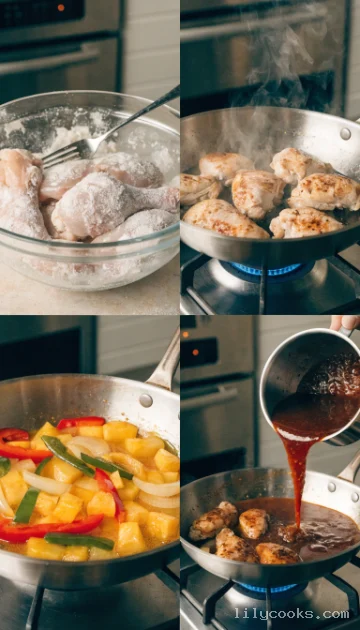
- Marinate the Chicken: In a medium bowl, combine the chicken pieces, 2 tablespoons of soy sauce, and 1 tablespoon of cornstarch. Mix well to ensure every piece is evenly coated. Let it sit for at least 10 minutes while you prepare the other ingredients. This brief rest allows the cornstarch to create a thin barrier that will help the chicken brown beautifully and retain its juices.
- Prepare the Sauce: In a small bowl, whisk together the ½ cup of pineapple juice, ¼ cup of soy sauce, brown sugar, rice vinegar, minced garlic, and grated ginger. In a separate tiny bowl, mix the 1 tablespoon of cornstarch with the 2 tablespoons of water to create a slurry. Set both bowls aside.
- Sear the Chicken: Heat 1 tablespoon of oil in a large skillet or wok over medium-high heat. Once the oil is shimmering, add the chicken in a single layer (work in batches if necessary to avoid overcrowding). Let it cook for 4-5 minutes without moving it too much, until the bottom is deeply golden and crispy. Flip the pieces and cook for another 3-4 minutes, until cooked through and no longer pink inside. Remove the chicken from the skillet and set it aside on a plate.
- Sauté the Pineapple and Peppers: Reduce the heat to medium. Add the remaining 1 tablespoon of oil to the same skillet. Add the drained pineapple chunks and cook for 2-3 minutes, until they start to get golden brown and caramelized around the edges. This step is crucial for a deep, sweet flavor. Add the sliced red and green bell peppers and cook for another 2-3 minutes, until they begin to soften slightly but still retain a pleasant crunch.
- Deglaze and Create the Sauce: Pour the chicken broth into the skillet, scraping the bottom with a wooden spoon to release all those tasty browned bits. This process, called deglazing, adds immense flavor to the sauce. Let the broth simmer for 1-2 minutes.
- Thicken the Sauce: Pour the prepared sauce mixture over the vegetables and pineapple. Bring it to a gentle simmer. Give your cornstarch slurry a quick stir (as it can settle) and pour it into the pan. Stir continuously for 1-2 minutes, and watch as the sauce magically transforms from a thin liquid into a glossy, thick glaze that coats the back of a spoon.
- Combine and Serve: Return the cooked chicken to the skillet. Toss everything together until the chicken is completely coated in the delicious sauce and the ingredients are fully combined. Cook for just one more minute to warm the chicken through. Remove from heat.
- Assemble Your Bowls: Scoop a generous portion of fluffy cooked rice into each bowl. Pile the tropical chicken mixture on top. Garnish with a sprinkle of sliced green onions and sesame seeds.
Tips for Success
- Get the Pan Hot Enough: For a beautiful sear on the chicken and pineapple, your pan must be hot. If the oil isn’t shimmering, wait. A proper sear creates a flavorful crust (the Maillard reaction) that is the foundation of this dish’s taste.
- Avoid Overcrowding the Pan: When searing the chicken, give it space. If you crowd the pan, the chicken will steam instead of sear, resulting in a pale, less flavorful dish. Cook in batches if necessary.
- Caramelize the Pineapple: Don’t rush this step! Letting the pineapple sit and get brown edges is what gives it that incredible, deep, candy-like sweetness. It changes the entire profile of the dish.
- Adjust Sweetness and Heat: Feel free to tailor this dish to your palate. For a spicier kick, add a pinch of red pepper flakes to the sauce. If you prefer a less sweet sauce, reduce the brown sugar to ¼ cup. You are the chef, so taste as you go!
- Fresh vs. Canned Pineapple: While canned pineapple works wonderfully and is very convenient, fresh pineapple can be substituted. Just be sure to peel, core, and dice it into 1-inch chunks. Fresh pineapple is less sweet, so you might want to add an extra tablespoon of sugar to the sauce.
Serving Suggestions
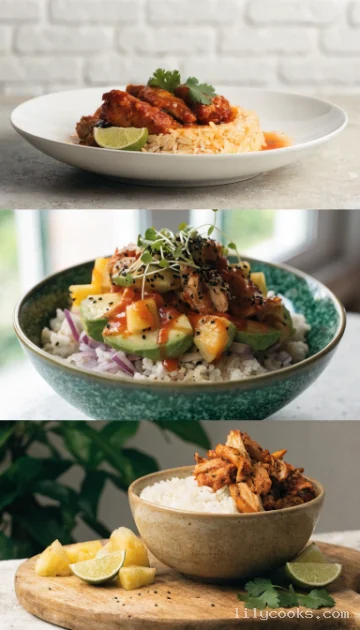
The beauty of a rice bowl is its incredible versatility. Beyond the classic presentation over a bed of steamed white rice, try these exciting variations. For a healthier, low-carb option, serve the pineapple chicken over a bed of fluffy cauliflower rice, sautéed zucchini noodles, or a pile of fresh, crisp greens for a salad-style bowl. For an extra layer of flavor and a touch of indulgence, top your bowl with sliced creamy avocado, a drizzle of spicy sriracha mayo, or a handful of toasted cashews for a satisfying crunch. To make it a true island feast, serve these bowls alongside crispy wonton strips or a light, refreshing cucumber salad. Consider creating a “build-your-own” bowl bar for a fun dinner party, providing an assortment of toppings like toasted coconut flakes, lime wedges, fresh cilantro, and chopped peanuts so everyone can customize their meal to their liking.
Storage Tips
- Refrigeration: Leftover Tropical Pineapple Chicken Rice Bowls store beautifully in the refrigerator. Place the chicken mixture and the rice in separate airtight containers to prevent the rice from becoming mushy. They will stay fresh for up to 4 days.
- Freezing: You can freeze the cooked chicken and sauce mixture in a freezer-safe container for up to 2 months. The flavor of the sauce may mellow slightly, but it will still be delicious. It is best to freeze the mixture without the rice, as rice can become dry and crumbly when thawed and reheated.
- Reheating: For the best results, reheat the chicken mixture in a skillet over medium heat with a splash of water or chicken broth to loosen the sauce. You can also microwave it, stirring halfway through, until piping hot. Reheat the rice separately in the microwave with a damp paper towel over the top to restore its fluffiness.
Can I use chicken breast instead of thighs?
Absolutely. Chicken breast is a leaner option. Just be careful to not overcook it, as it can become dry more easily than thighs. Pound the breasts to an even thickness and slice them into bite-sized pieces before marinating. Sear them until they are golden and cooked through, which will take a few minutes less than the thighs.
What can I substitute for rice vinegar?
If you don’t have rice vinegar, you can use apple cider vinegar or white wine vinegar. For a more subtle taste, you can even use a splash of fresh lime juice, which would also complement the tropical flavors.
Can I make this recipe gluten-free?
Yes, easily. Use tamari or a certified gluten-free soy sauce in place of the regular soy sauce. All other ingredients, like rice, pineapple, and cornstarch, are naturally gluten-free. Be sure to check the labels on your chicken broth, just in case.
I don’t have fresh ginger. Can I use ground ginger?
You can, but fresh ginger is highly recommended for its bright, pungent flavor. If you must use ground ginger, start with about ½ teaspoon. It won’t have the same zesty kick, but it will still add a pleasant warmth to the dish.
My sauce turned out too thick. What should I do?
If your sauce becomes thicker than you’d like, simply stir in a little extra chicken broth or water, a tablespoon at a time, until it reaches your desired consistency. Bring it back to a simmer to ensure it’s well incorporated.
Conclusion
This Tropical Pineapple Chicken Rice Bowl is more than just a recipe; it is an experience—a little taste of sunshine that you can create any night of the week. From the first sizzle of the chicken to the final bite of sweet, savory, and tangy perfection, this dish is a guaranteed crowd-pleaser. It’s the kind of meal that makes you feel like a master chef, yet it is wonderfully forgiving and simple to make.
tropical pineapple chicken rice bowl recipe
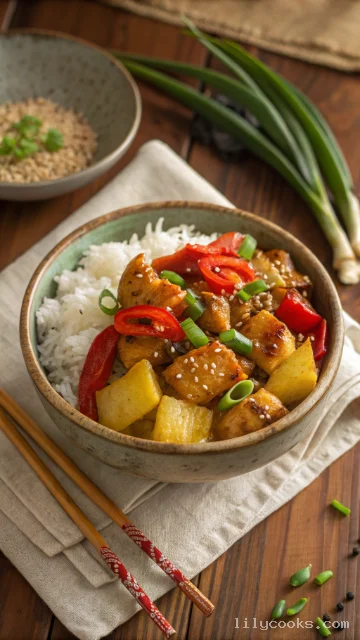
This recipe is all about big, bold flavors with minimal fuss. Imagine juicy, golden-brown chicken pieces coated in a rich, tangy sauce that clings to every morsel. The star of the show is the pineapple, which when seared, releases its natural sugars and creates a delightful caramelized exterior that pairs perfectly with the savory garlic and ginger. We add a crisp-tender crunch from bell peppers and the fresh, bright bite of green onions. Served over a bed of fluffy rice, this bowl is a complete meal that comes together in under 45 minutes. It is an easy, one-pan wonder that is sure to become a weeknight hero.
Ingredients
- 1 ½ lbs boneless, skinless chicken thighs (cut into 1-inch pieces): Chicken thighs are preferred for their higher fat content, ensuring they stay incredibly moist and tender during the high-heat cooking process. You can substitute chicken breast, but be careful not to overcook it.
- 2 tablespoons low-sodium soy sauce: This provides the savory umami base for the marinade without making it overly salty.
- 1 tablespoon cornstarch: This is our secret weapon for creating a light, velvety coating on the chicken that helps thicken the sauce later.
- 1 tablespoon vegetable or canola oil: Used to coat the chicken for searing, preventing it from sticking to the pan.
- For the Sauce:
- ½ cup pineapple juice: Using the juice from your can of pineapple chunks is the easiest way to infuse the sauce with concentrated tropical flavor. It provides the liquid base for the sauce.
- ¼ cup low-sodium soy sauce: The second wave of savory flavor, balancing the sweetness of the pineapple.
- ⅓ cup brown sugar, packed: This darkens the sauce and adds a deep, molasses-like sweetness that perfectly complements the tanginess.
- 2 tablespoons rice vinegar: This adds a necessary acidity that cuts through the richness and brightens the entire dish.
- 2 cloves garlic, minced: Fresh garlic is essential for its aromatic punch.
- 1 teaspoon fresh ginger, grated: Grated ginger offers a warm, spicy, and slightly peppery note that is characteristic of tropical and Asian-inspired cooking. Fresh is significantly more flavorful than dried.
- 1 tablespoon cornstarch + 2 tablespoons water (slurry): This is a classic thickening technique. Mixing cornstarch with cold water before adding it to the hot sauce prevents lumps and creates a glossy, smooth finish.
- For the Bowl:
- 2 tablespoons vegetable or canola oil: For sautéing the pineapple and bell peppers.
- 1 (20 oz) can pineapple chunks in juice, drained (reserve ½ cup juice for sauce): The key here is the sear; we want the pineapple to get some color and caramelization, which deepens its sweetness.
- 1 red bell pepper, sliced: Adds a beautiful pop of color and a sweet, mild crunch. Yellow or orange bell peppers work wonderfully too.
- 1 red bell pepper, sliced: Adds a beautiful pop of color and a sweet, mild crunch. Yellow or orange bell peppers work wonderfully too.
- 1 green bell pepper, sliced: Provides a slightly more bitter, grassy note and color contrast.
- 1 green bell pepper, sliced: Provides a slightly more bitter, grassy note and color contrast.
- ½ cup chicken broth (or water): This deglazes the pan, picking up all the delicious browned bits left behind from the chicken.
- ½ cup chicken broth (or water): This deglazes the pan, picking up all the delicious browned bits left behind from the chicken.
- Cooked white or jasmine rice, for serving: Fluffy, fragrant rice is the perfect neutral canvas to soak up all that amazing sauce.
- Cooked white or jasmine rice, for serving: Fluffy, fragrant rice is the perfect neutral canvas to soak up all that amazing sauce.
- Green onions, sliced, for garnish: Adds a fresh, mild oniony bite and a pop of green color.
- Green onions, sliced, for garnish: Adds a fresh, mild oniony bite and a pop of green color.
- Sesame seeds, for garnish (optional): Provides a nutty flavor and lovely visual texture.
- Sesame seeds, for garnish (optional): Provides a nutty flavor and lovely visual texture.
Instructions
- Marinate the Chicken: In a medium bowl, combine the chicken pieces, 2 tablespoons of soy sauce, and 1 tablespoon of cornstarch. Mix well to ensure every piece is evenly coated. Let it sit for at least 10 minutes while you prepare the other ingredients. This brief rest allows the cornstarch to create a thin barrier that will help the chicken brown beautifully and retain its juices.
- Prepare the Sauce: In a small bowl, whisk together the ½ cup of pineapple juice, ¼ cup of soy sauce, brown sugar, rice vinegar, minced garlic, and grated ginger. In a separate tiny bowl, mix the 1 tablespoon of cornstarch with the 2 tablespoons of water to create a slurry. Set both bowls aside.
- Sear the Chicken: Heat 1 tablespoon of oil in a large skillet or wok over medium-high heat. Once the oil is shimmering, add the chicken in a single layer (work in batches if necessary to avoid overcrowding). Let it cook for 4-5 minutes without moving it too much, until the bottom is deeply golden and crispy. Flip the pieces and cook for another 3-4 minutes, until cooked through and no longer pink inside. Remove the chicken from the skillet and set it aside on a plate.
- Sauté the Pineapple and Peppers: Reduce the heat to medium. Add the remaining 1 tablespoon of oil to the same skillet. Add the drained pineapple chunks and cook for 2-3 minutes, until they start to get golden brown and caramelized around the edges. This step is crucial for a deep, sweet flavor. Add the sliced red and green bell peppers and cook for another 2-3 minutes, until they begin to soften slightly but still retain a pleasant crunch.
- Deglaze and Create the Sauce: Pour the chicken broth into the skillet, scraping the bottom with a wooden spoon to release all those tasty browned bits. This process, called deglazing, adds immense flavor to the sauce. Let the broth simmer for 1-2 minutes.
- Thicken the Sauce: Pour the prepared sauce mixture over the vegetables and pineapple. Bring it to a gentle simmer. Give your cornstarch slurry a quick stir (as it can settle) and pour it into the pan. Stir continuously for 1-2 minutes, and watch as the sauce magically transforms from a thin liquid into a glossy, thick glaze that coats the back of a spoon.
- Combine and Serve: Return the cooked chicken to the skillet. Toss everything together until the chicken is completely coated in the delicious sauce and the ingredients are fully combined. Cook for just one more minute to warm the chicken through. Remove from heat.
- Assemble Your Bowls: Scoop a generous portion of fluffy cooked rice into each bowl. Pile the tropical chicken mixture on top. Garnish with a sprinkle of sliced green onions and sesame seeds.